Reconstructing population preferences from a compact LLM ensemble — no finetuning,
no demographics, under $1 per ATP survey.
Bingchen Wang · Zi-Yu Khoo · Jingtan Wang
At a glance
From problem to paradigm shift
1234
Swipe to pan the drawing
01Problem
Large language models are increasingly used as proxies for human subjects in social science research, but conclusions drawn from them hold for a real population (external validity) only if the synthetic agents faithfully reflect that population's preferences.
02Why rethink it
Existing preference-alignment paradigms typically rely on demographic profiling or finetuning a single one-size-fits-all model. These approaches are resource-intensive, often require sensitive data and substantial compute, and do not directly explain how population-level preference heterogeneity should be reconstructed.
03Idea
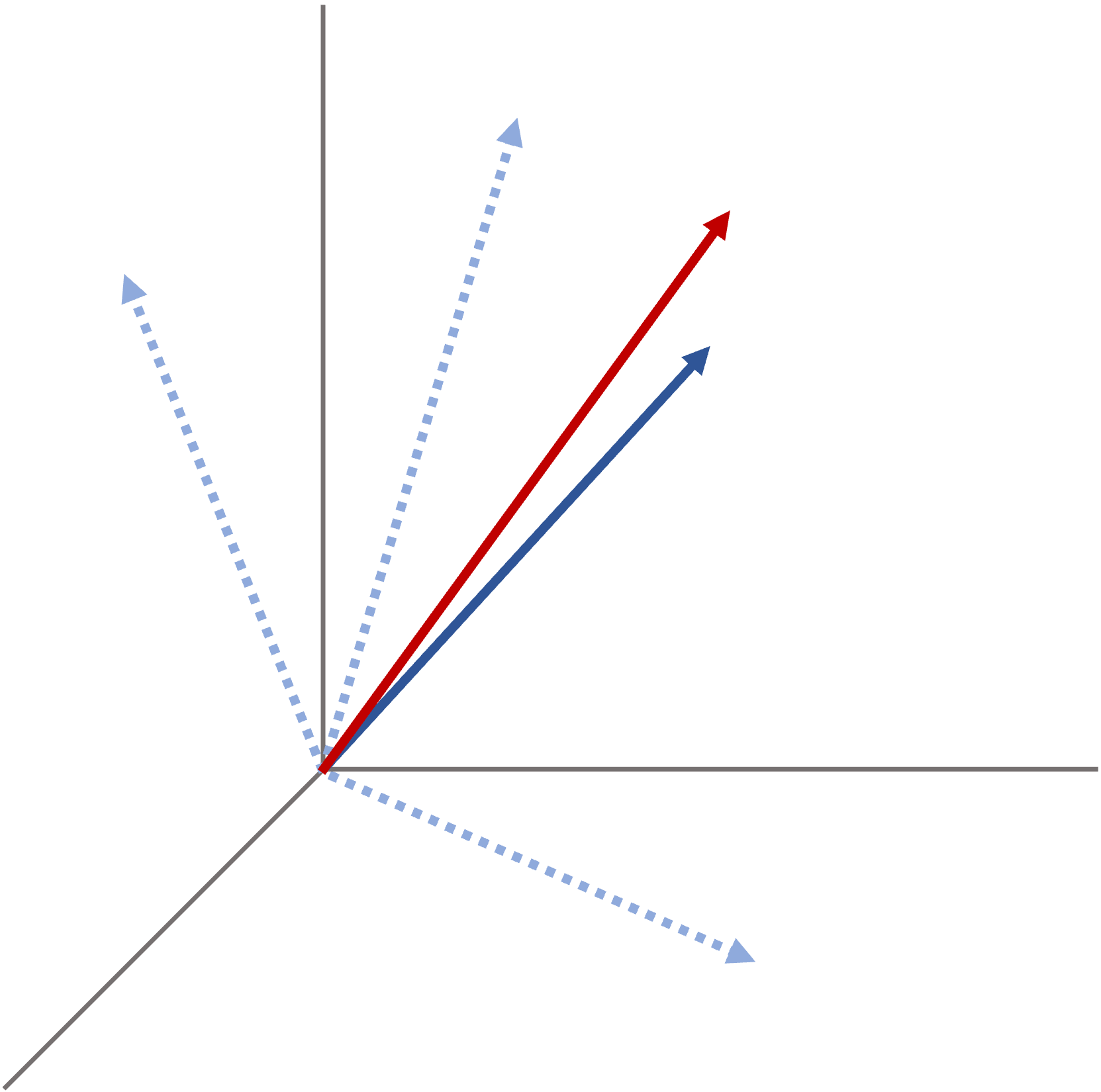
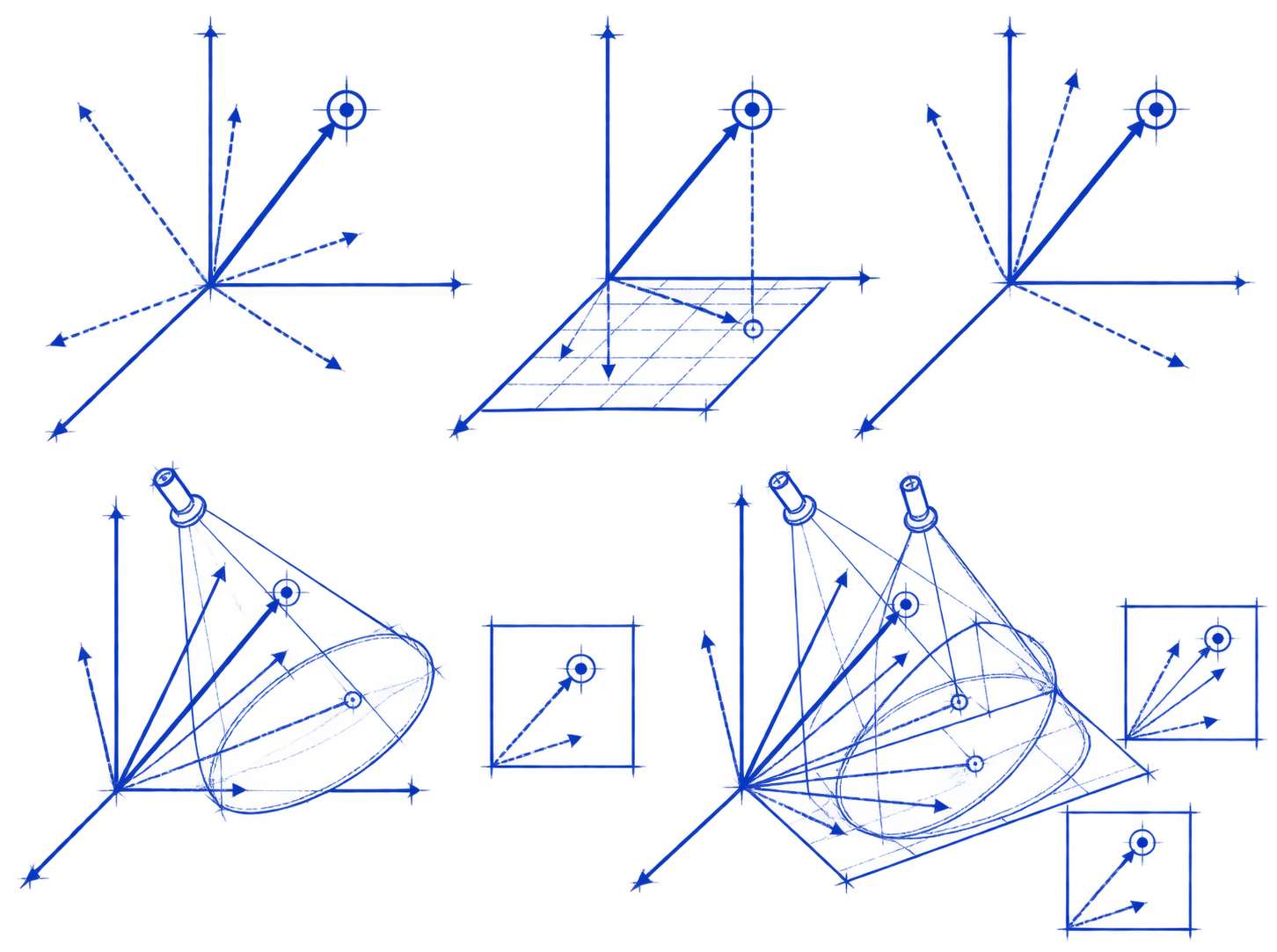
We introduce preference reconstruction theory, which treats preference alignment as a problem of representation learning and statistical inference. Instead of matching profiles, it constructs an expressive basis of proxy agents and recovers population-level preferences through weighted aggregation.
04Result
Implemented as a two-stage system, P2P requires no finetuning and no sensitive demographic data, achieves an average test MSE of 0.014 across 14 ATP waves, runs at roughly $0.8 per survey, and yields distinctive empirical insights unavailable under demographic-matching approaches.
How it works
Preference reconstruction in three steps
Build a diverse agent pool
Stage 1 uses a structured attribute bank and entropy-guided adaptive sampling to generate endowments spanning the latent preference space.
01Attributes from the bank are instantiated and combined into agent endowments that span the preference space.
Key results
Efficient, accessible, and empirically validated
0.014Average test MSE
41%Mean per-wave improvement over best baseline
$0.8Cost per ATP survey
14ATP waves evaluated
ATP benchmark
Table 1: averages across 14 ATP waves; each method evaluated over 3 runs. Costs in USD.
Method
Test MSE
Entropy
Cost
Vanilla
0.025
0.45
$0.7
PERSONA
0.029
0.43
$1.3
P2P
0.014
0.53
$0.8
Interpretation
P2P frames accessibility as a design principle rather than a compromise: no finetuning,
no demographic profiling, CPU-friendly deployment, and strong performance under modest
resource constraints.
All three methods use the same Stage 2 constrained lasso aggregation. The 41% improvement is the mean of per-wave test MSE reductions relative to the best baseline in each wave.
Cost estimates are based on Gemini-2.0-flash. PERSONA cost only covers the response elicitation stage—higher if persona generation tokens are included.
Paradigmatic contribution
Beyond digital twins
P2P does not treat faithful emulation as a problem of demographic matching. It treats it as a problem of
representation learning and statistical inference.
Preference reconstruction, not profiling.
Existing approaches typically rely on demographic conditioning or a single finetuned model.
P2P instead constructs an expressive basis of proxy agents and recovers population-level preferences
through weighted aggregation.
Expressive basis beats demographic matching.
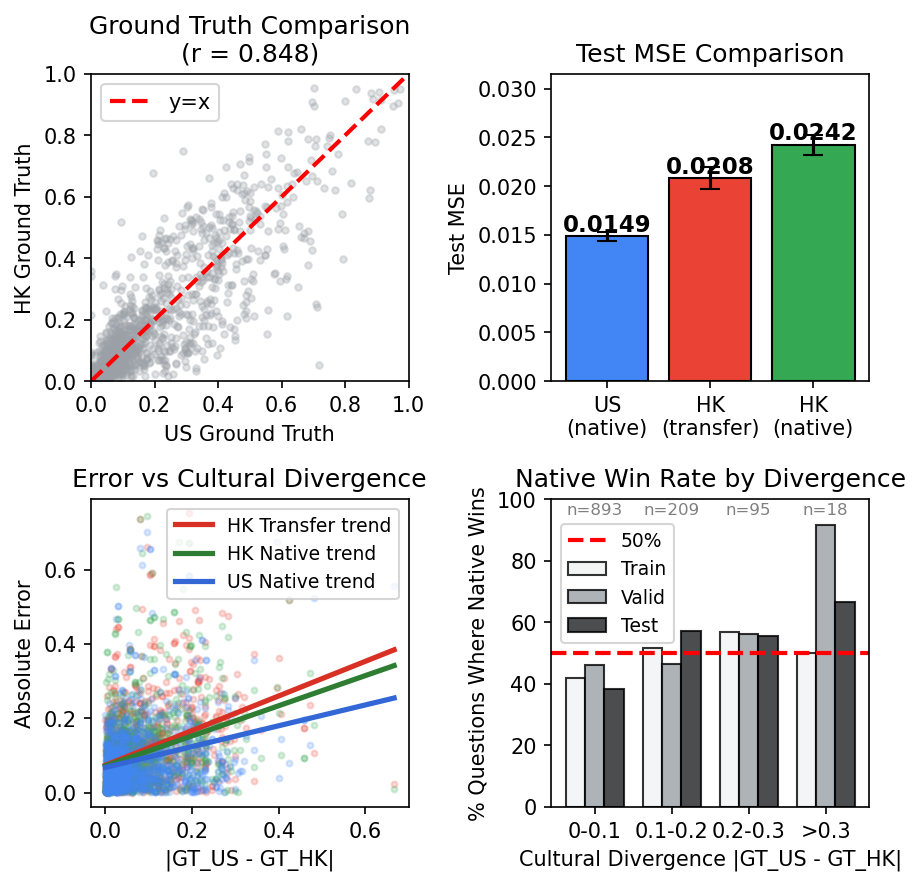
Figure 3 shows that a more expressive US-generated basis, after only Stage 2 weight refitting,
outperforms HK-native generation on average. This directly challenges the assumption that locale-matched
profiling is necessary for faithful emulation.
Localization matters on culturally divergent questions.
The same analysis shows where localization helps: prediction error scales with cultural divergence,
and locale-matched generation regains an edge on culturally distinctive dimensions. This turns P2P into
a diagnostic tool for studying alignment failure, not just a method for improving fit.
Figure 3. Basis expressiveness vs. locale matching on WVS HK. After refitting Stage 2 weights to HK responses, the US-generated basis achieves lower test MSE (0.0208) than HK-native generation (0.0242). Reconstruction error grows with US–HK response divergence, while HK-native generation wins more often on culturally divergent questions.
View full-size figure.
Record
Submission history
Accepted at NeurIPS 2026 · Main Track, posterFull record
Submission
arXiv
25 Jul 2025
AAAI-26
14 Sep 2025
arXiv v1
18 Sep 2025
ICLR-26
23 Jan 2026
ICML-26
28 Jan 2026
arXiv v2
01 May 2026
NeurIPS-26
25 Sep 2026
NeurIPS 2026 · accepted
Software · P2P Studio
A workspace for preference reconstruction.
Inspect the fitted proxies, check held-out predictions, and explore how response diversity develops—all in one local workspace.
git clone https://github.com/bingchen-wang/P2P.git
cd P2P
python -m pip install -e .
cd studio && npm ci && npm run build && cd ..
p2p ui
New to P2P? Start with the separate offline demo on Studio’s home screen.
Citation
BibTeX
Paper. If you build on the method or the empirical results.
@inproceedings{wang2026prompts,
  title     = {Prompts to Proxies: Emulating Human Preferences via a Compact {LLM} Ensemble},
  author    = {Wang, Bingchen and Khoo, Zi-Yu and Wang, Jingtan},
  booktitle = {Advances in Neural Information Processing Systems},
  year      = {2026}
}
Software. If you use the P2P software.
@software{wang2026p2p,
  author  = {Wang, Bingchen},
  title   = {{P2P}: Prompts to Proxies},
  version = {0.1.0},
  year    = {2026},
  url     = {https://github.com/bingchen-wang/P2P}
}